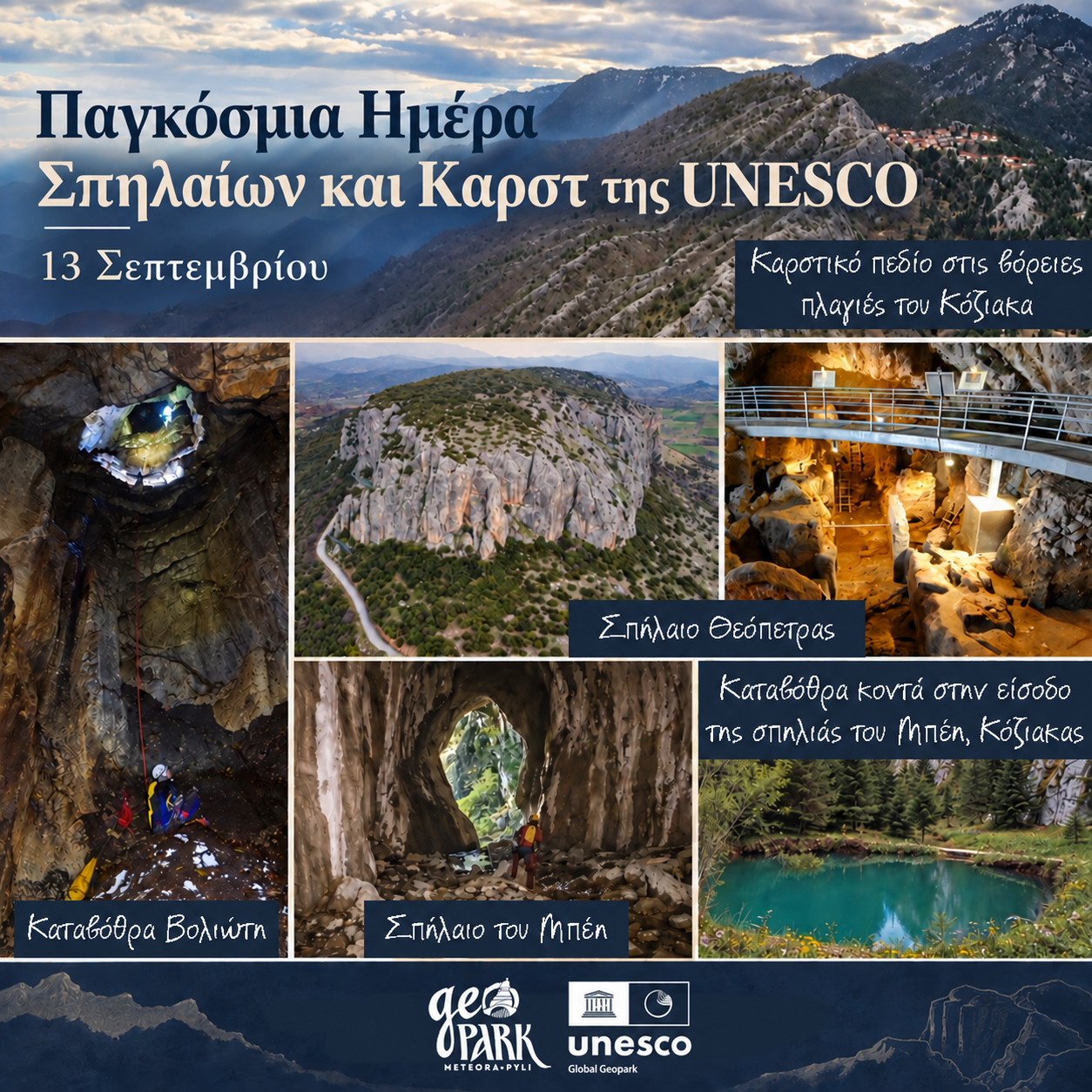
September 13 — 1st UNESCO International Day of Caves and Karst
This year, for the first time, the world is celebrating the International Day of Caves and Karst. A new UNESCO international day dedicated to the importance, beauty, and fragility of a landscape we almost never see—because it lies beneath our feet.
The Meteora–Pili Geopark has every reason to celebrate it.
How a Karst Landscape Is Formed
It all begins with a slow encounter: water meets limestone. Limestone, marble, and rocks with a high calcium carbonate content. Water seeps into cracks in the ground, flows underground, and gradually dissolves the rock. It takes thousands of years—and the result is an entire landscape carved from within: complex underground networks, galleries, chambers, and caves with striking geological formations, stalactites, and stalagmites.
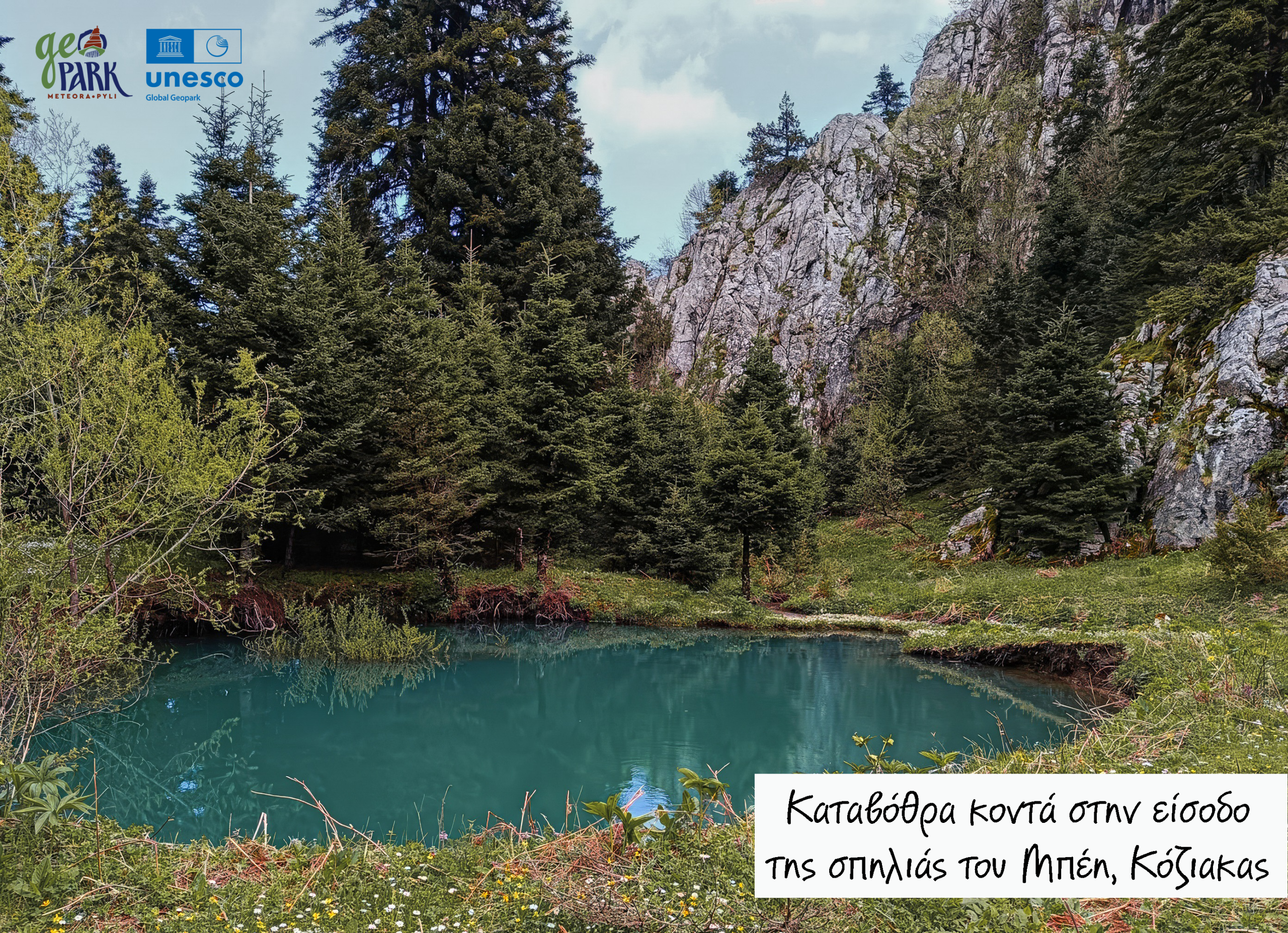
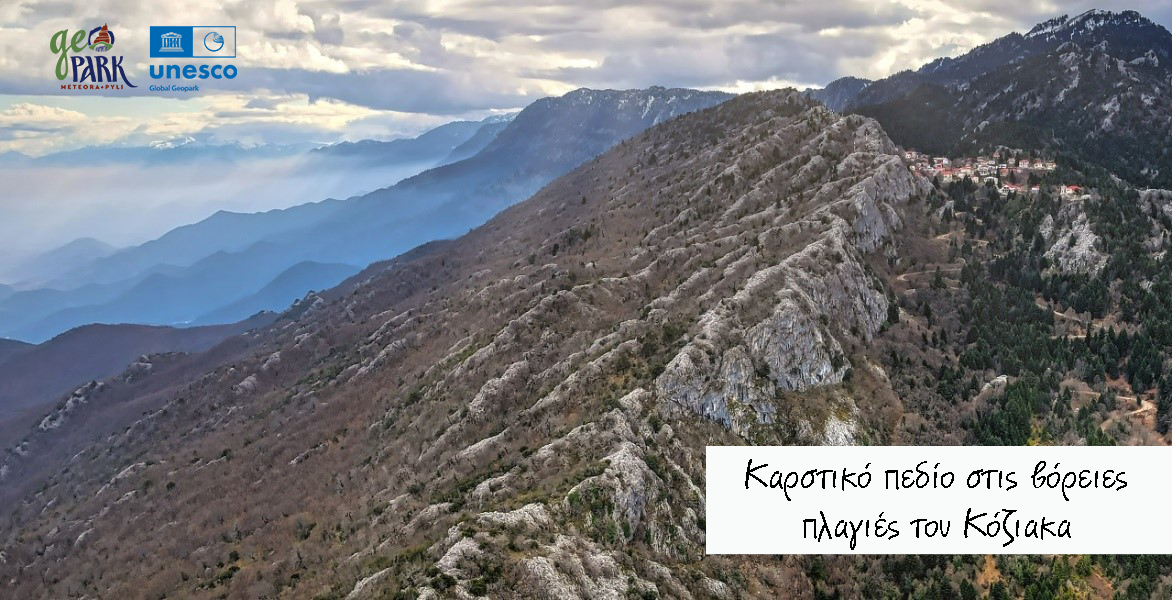
In the Meteora–Pili Geopark, this process has left its mark everywhere. Ravines and gorges. Springs that gush forth and become waterfalls. Underground channels that carry water to places the eye cannot see. And the basins—the natural “pools” carved out by karst erosion in mountain streams and torrents, which all of us in the area know from our summers there.
Our Caves
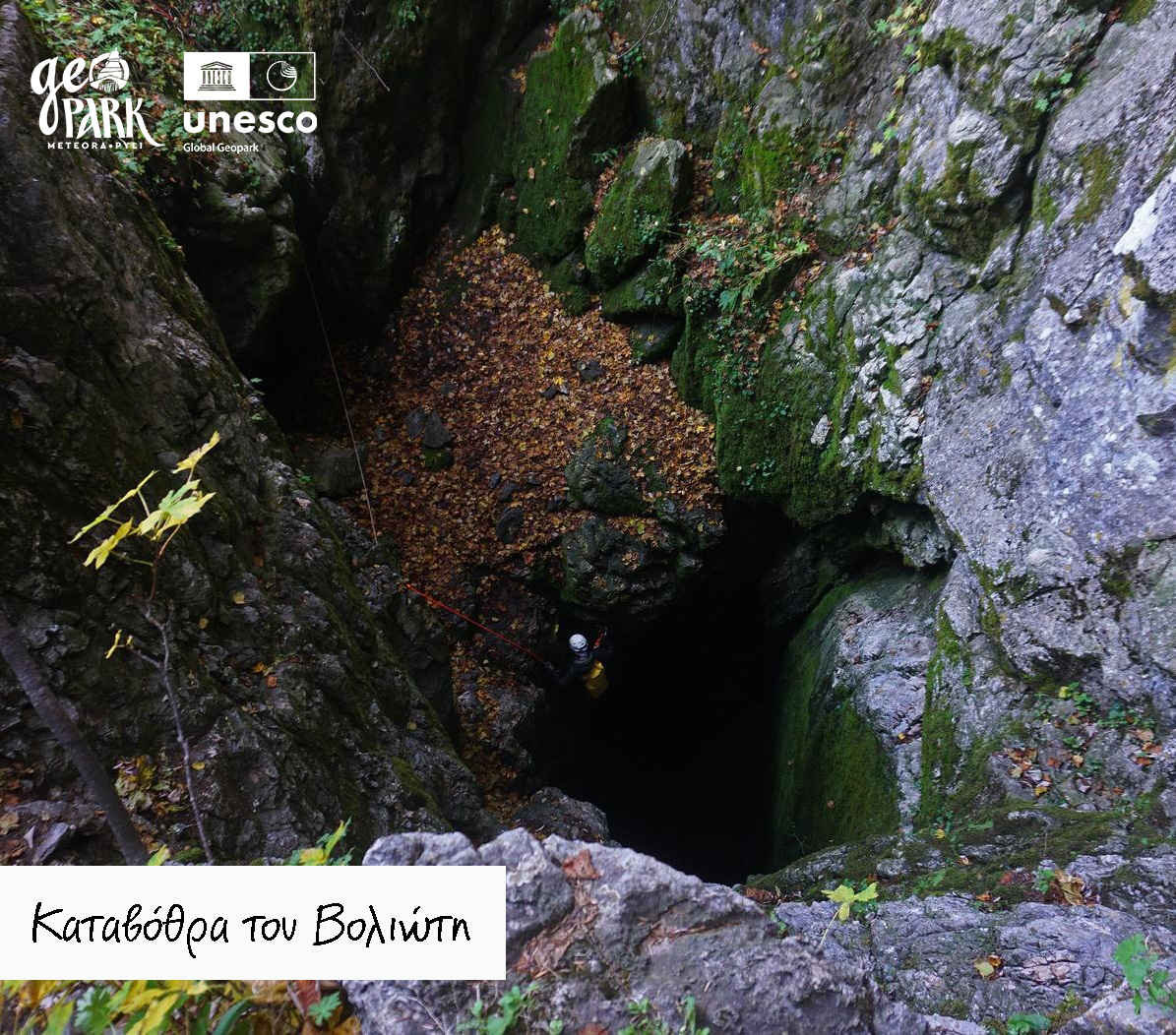
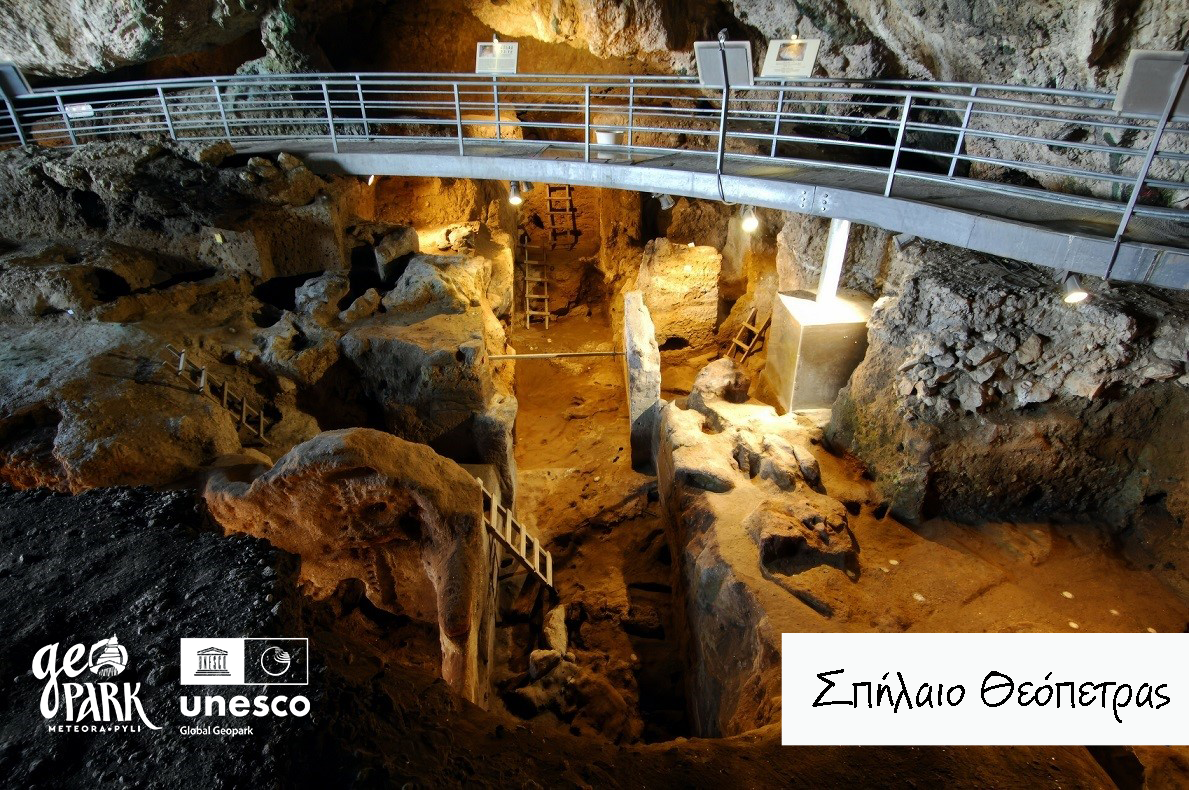
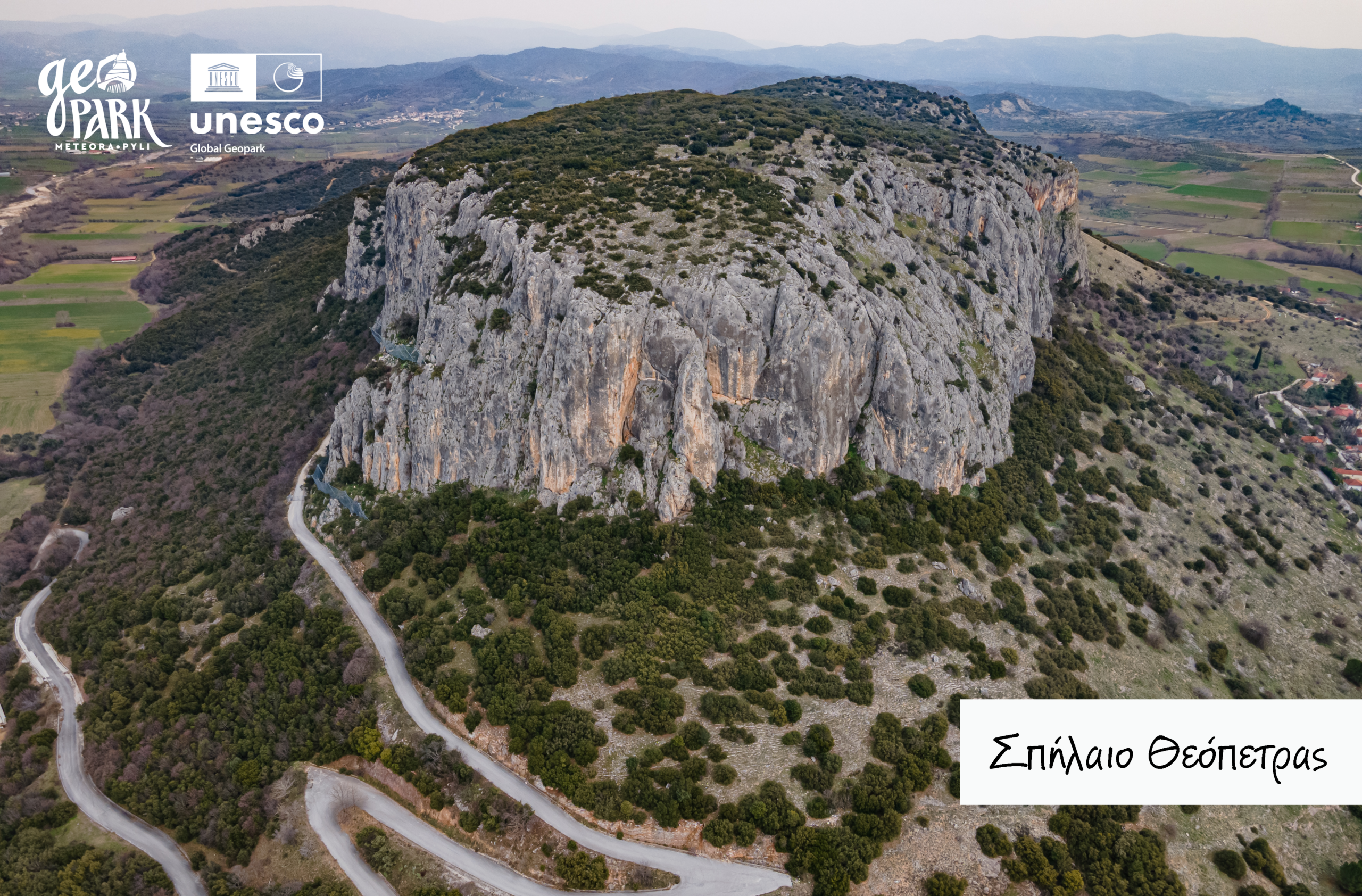
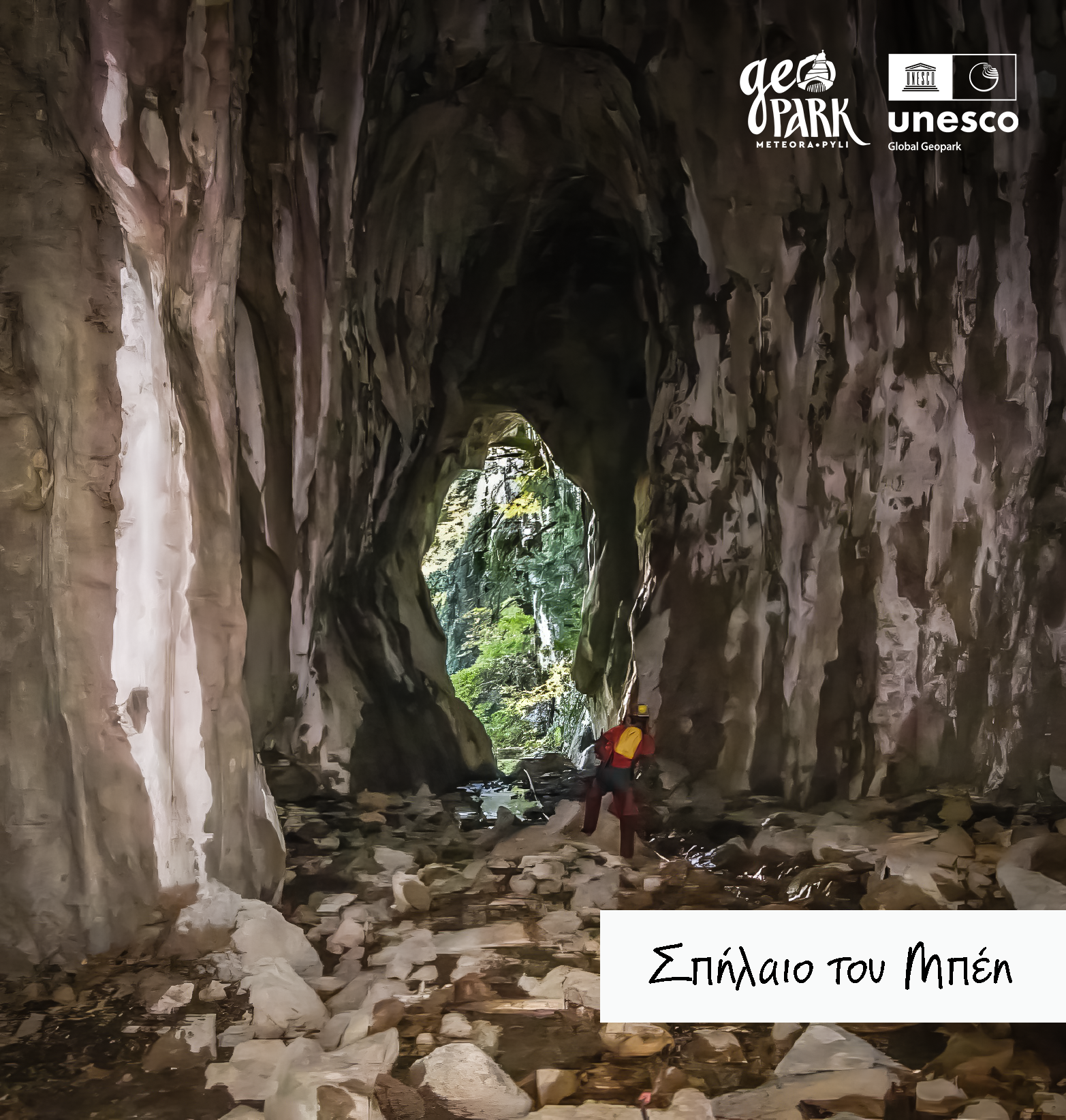
The best-known karst formations, however, are the caves—and here we find many and varied ones. In Koziaka, there’s the Cave of Bey and the Voliotis Sinkhole. And, of course, the most famous of them all: the Cave of Theopetra.
Because caves are not just about geology. Karst cavities were humanity’s first homes, dating back to the Paleolithic era. At Theopetra, the findings indicate a human presence dating back at least 130,000 years. Just think about it: a cavity in the rock sheltered people 130,000 years ago!
Why It Matters
Karst landscapes aren’t just impressive. They’re crucial:
- They are our reservoirs. They function as natural underground reservoirs and are one of the main sources of drinking water.
- They are sanctuaries of life. They are home to unique forms of life, adapted to total darkness.
- They are the Earth’s archives. The sediments and fossils they contain provide us with valuable information about prehistoric climate change and the history of humankind itself.
And they are fragile. A cave that becomes contaminated, a stalactite that breaks, an underground aquifer that becomes polluted—these cannot be restored within a single human lifetime. It took millennia for them to form.
On the 1st World Caves and Karst Day, the Meteora–Pili Geopark invites you to look a little closer to your feet. Because the landscape we admire from above was shaped from below.