Modern tourism development is characterized by a high concentration of visitors in limited geographical areas, leading to overtourism and an uneven distribution of economic benefits. At the same time, vast areas of the interior remain underutilized for tourism, despite their significant natural and cultural wealth. In this context, geotourism emerges as an effective tool for sustainable development, capable of extending both the length of visitors’ stays and the geographical spread of tourism activity.
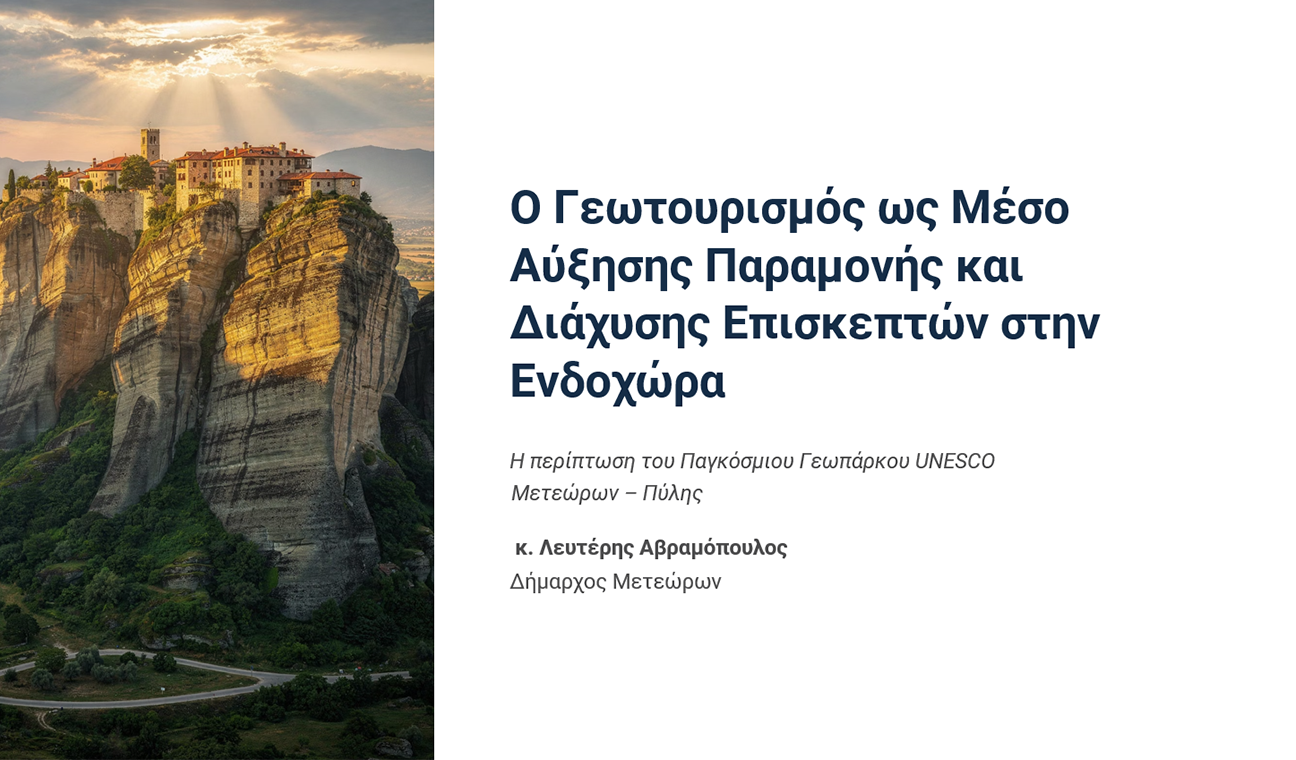
This paper examines the role of geotourism through the case of the Meteora–Pili Geopark, a UNESCO Global Geopark that combines significant geological, cultural, and environmental heritage. Through an analysis of the international literature and this specific case study, it is demonstrated that the development of geotourism routes, the use of digital tools, and the integration of local products can significantly contribute to extending visitors’ stays and to the spatial restructuring of tourist flows.
The results indicate that geotourism is a critical pillar for the sustainable development of inland and mountainous regions, strengthening the local economy, social cohesion, and the protection of geoheritage.
Read the full study HERE

