Behind the breathtaking landscape of Meteora and Pyli lies a history spanning millions of years, and the fossils bear witness to it. Thanks to them, we know that the area was once the bottom of the ocean, later a tropical coastline, and, much more recently, a refuge for animals during the Ice Age.
On the occasion of the “EGN Fossil of the Year 2027” contest, we invite you on a journey through time with three stops. The images accompanying this article are illustrative examples and do not necessarily come from finds within the Geopark.
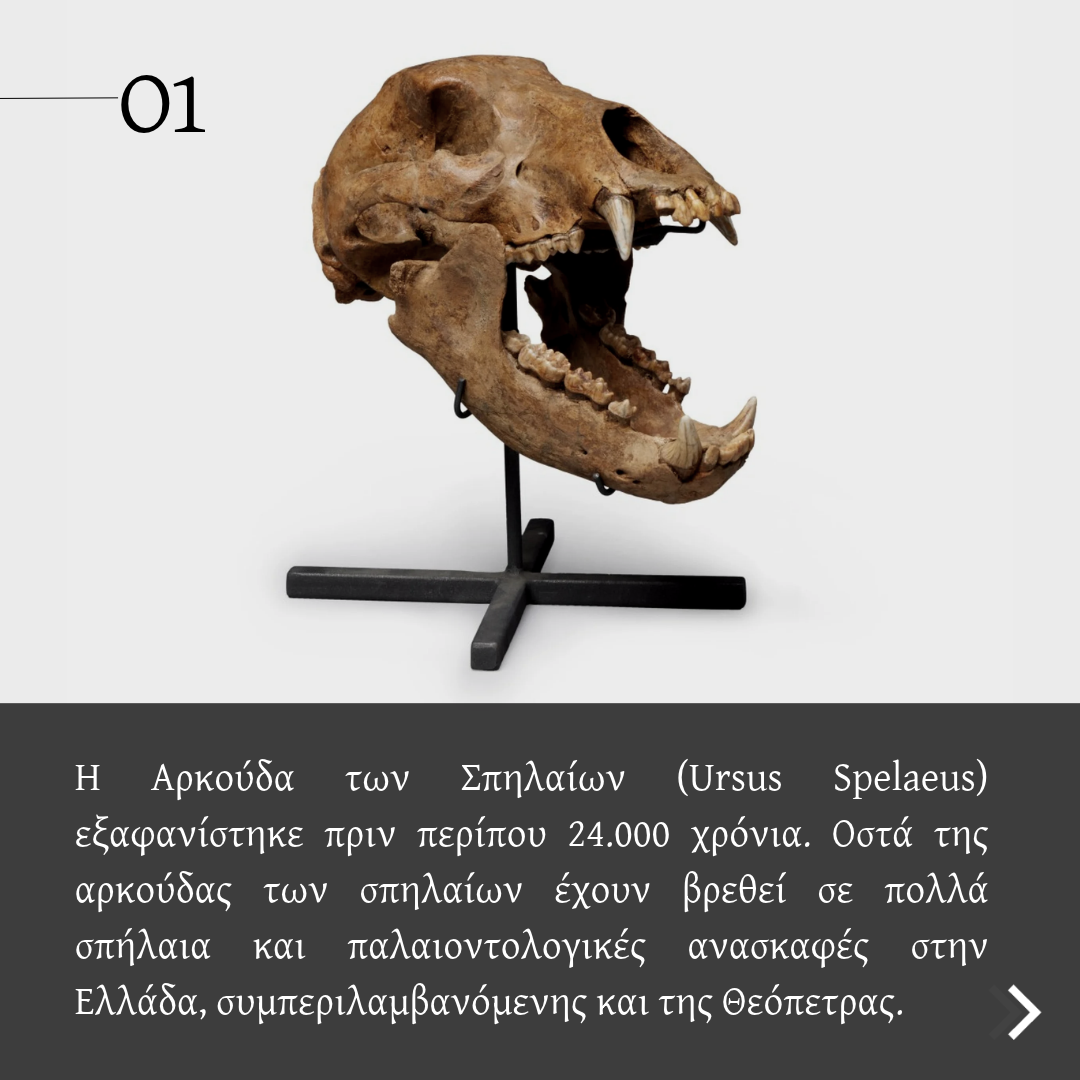
The Cave Bear (Ursus spelaeus)
The cave bear became extinct about 24,000 years ago, in the midst of the last Ice Age. It was related to today’s brown bear, but larger and heavier, with a massive skull and a characteristically high forehead.<br/>Translated with DeepL.com (free version)<br/><br/>
Despite her imposing appearance, her diet consisted mainly of plants. Her broad, worn teeth indicate that she chewed on tough vegetation. She spent the winter hibernating in caves, and that is where we find most of her bones today.
Cave bear bones have been found in many caves and paleontological excavations in Greece, including Theopetra. Its extinction is most likely linked to climate change, a decline in vegetation, and competition with humans for the same shelters.
Marine Gastropods of the Mesohellenic Trough
About 20–23 million years ago, during the Lower Miocene, the region of Grevena, Kastoria, and Kalambaka was a warm, shallow sea. The Mesohellenic Trough—the same basin in which the conglomerates of Meteora were formed—was then a marine bay of the Proto-Mediterranean.<br/>
At the Feliou section in Grevena, next to the Aliakmon River, researchers identified two distinct environments. The first was a muddy shoreline with marshes and freshwater inflows, where snails resistant to changes in salinity lived. The second was a shallow sea with seagrass meadows, rocks, and corals. In short, the area that is now Grevena and Kalambaka was once a tropical coast.
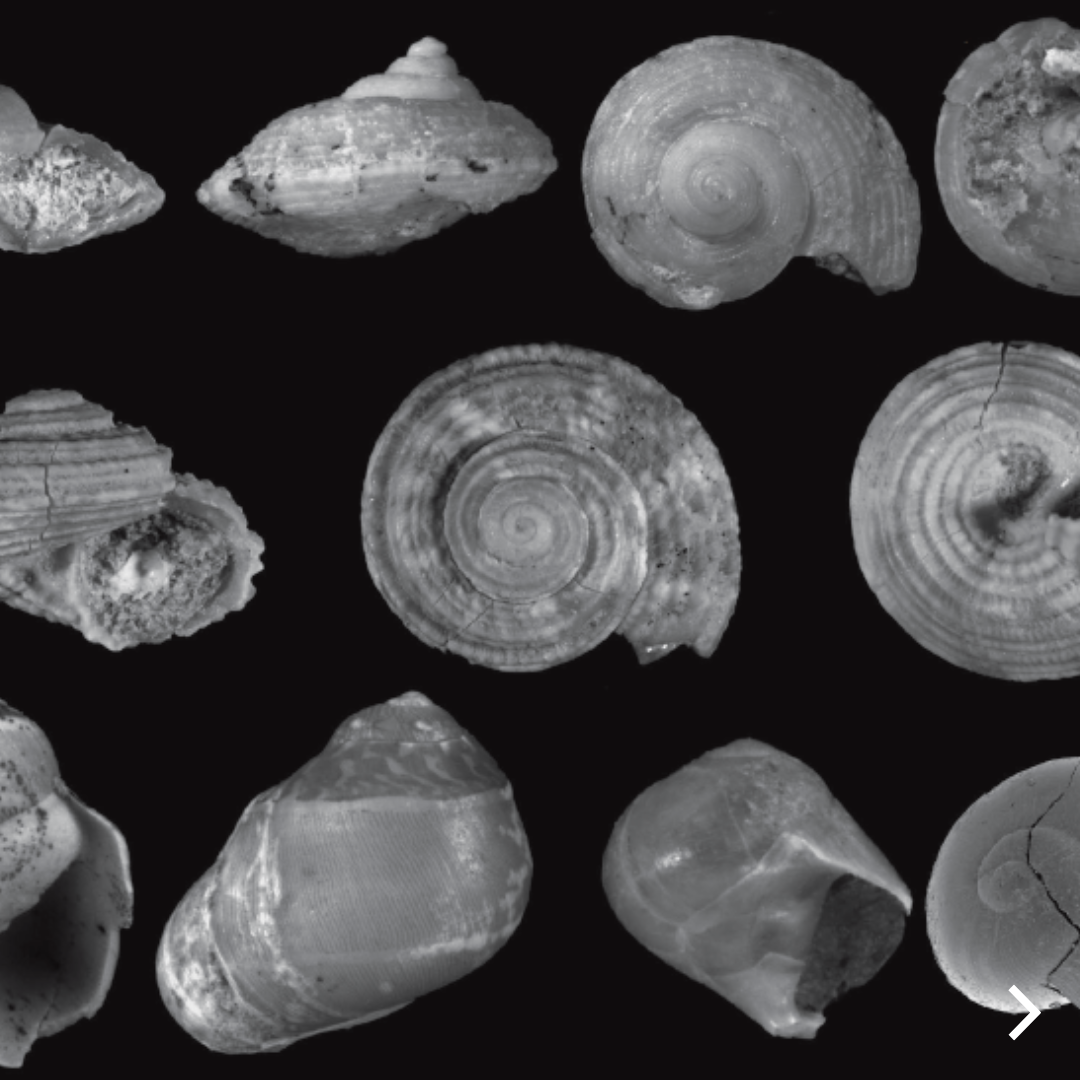
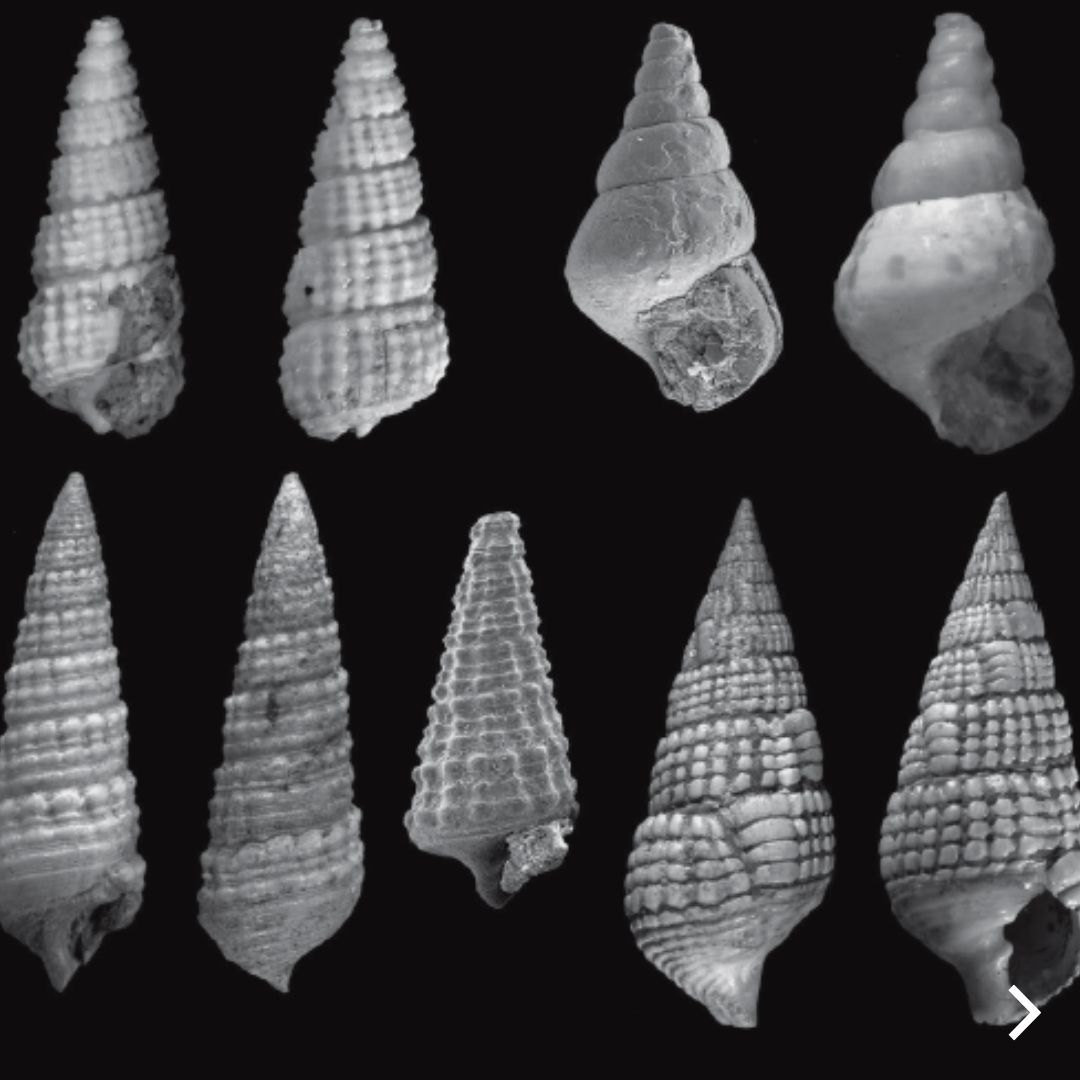
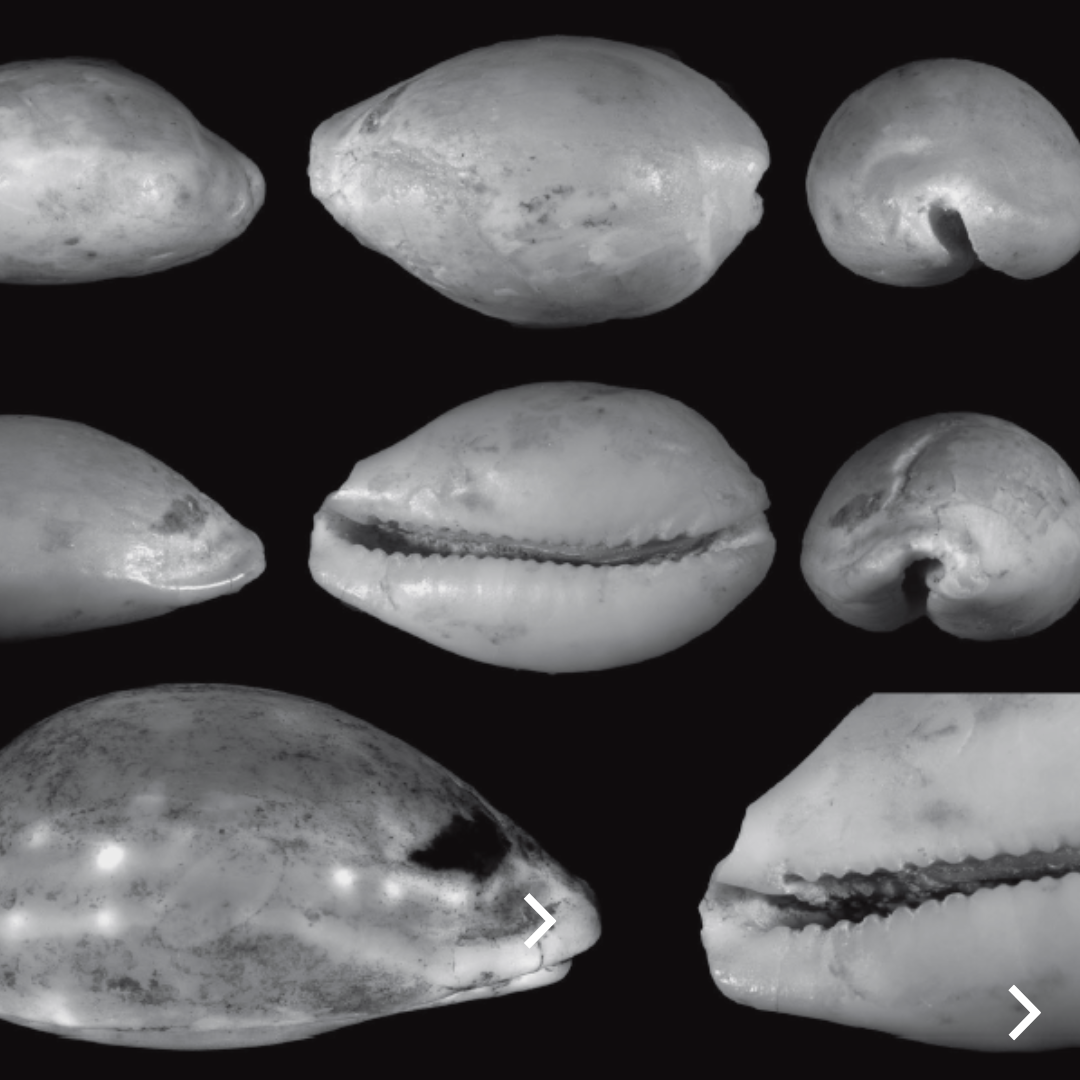
In the marine layers, 44 species of gastropods were recorded, most of them microscopic, measuring just a few millimeters. Among them are conical shells with richly embossed decoration, small porcelain-like shells (cyprids) with serrated rims, and large, spiny shells of the genus Melongena. In some specimens, even the original color scheme is still visible, appearing clearly under ultraviolet light.
Source: Thevaios, D., Harzhauser, M., & Koskiridou, E. 2019. Early Miocene gastropods from the Felli section (Proto-Mediterranean Sea, NW Greece). Geodiversitas 41 (8): 323–366.
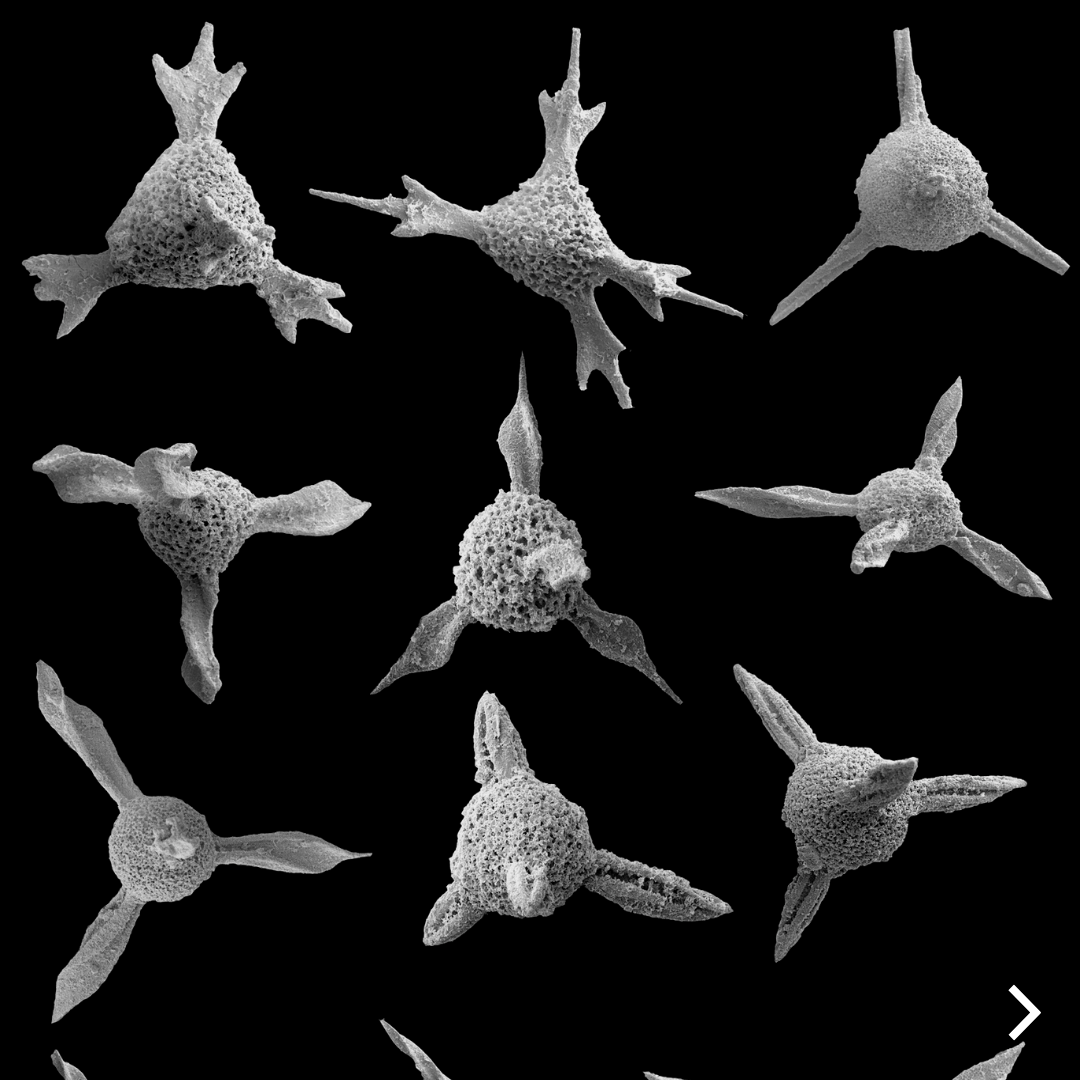
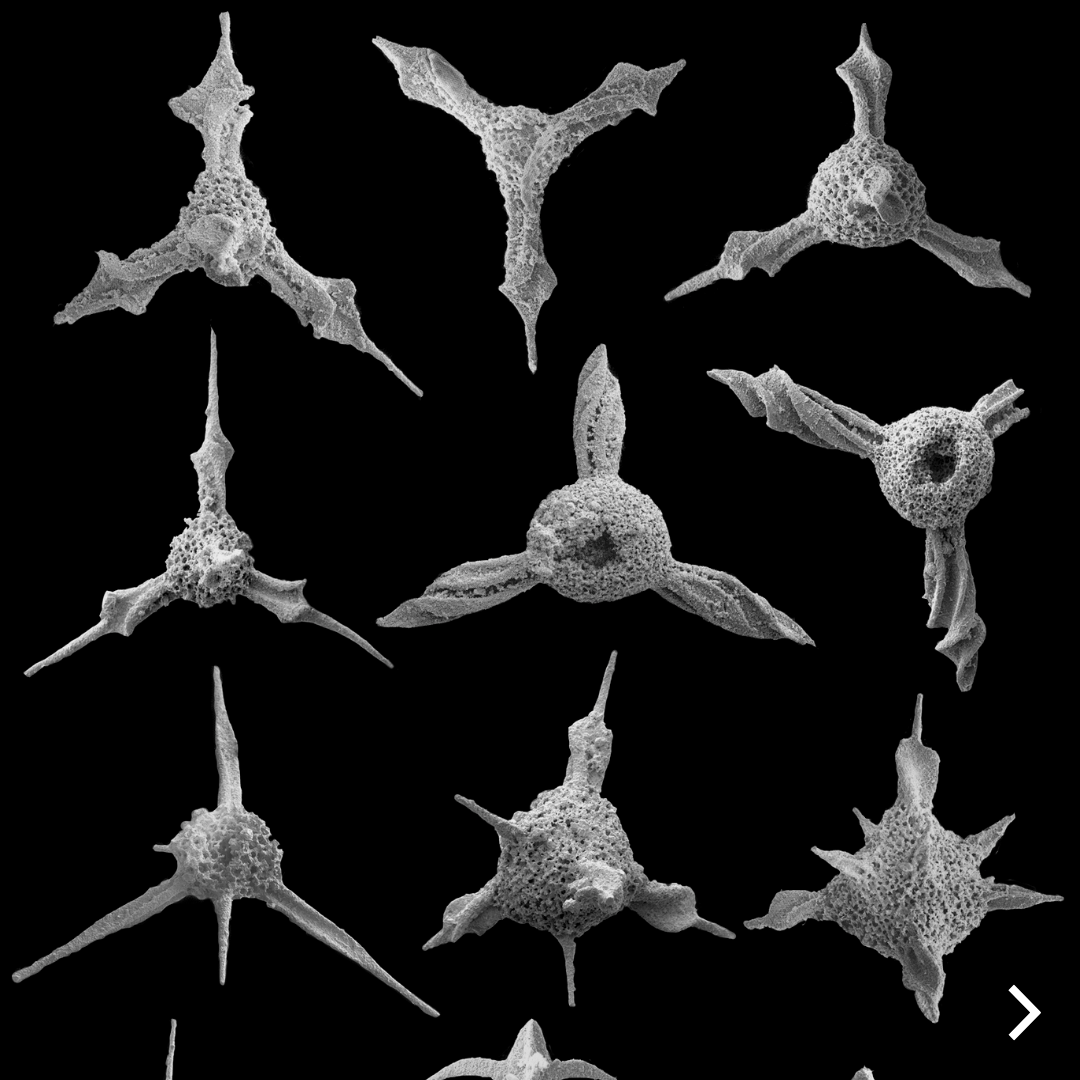
Radiolaria of the Pindos Ocean
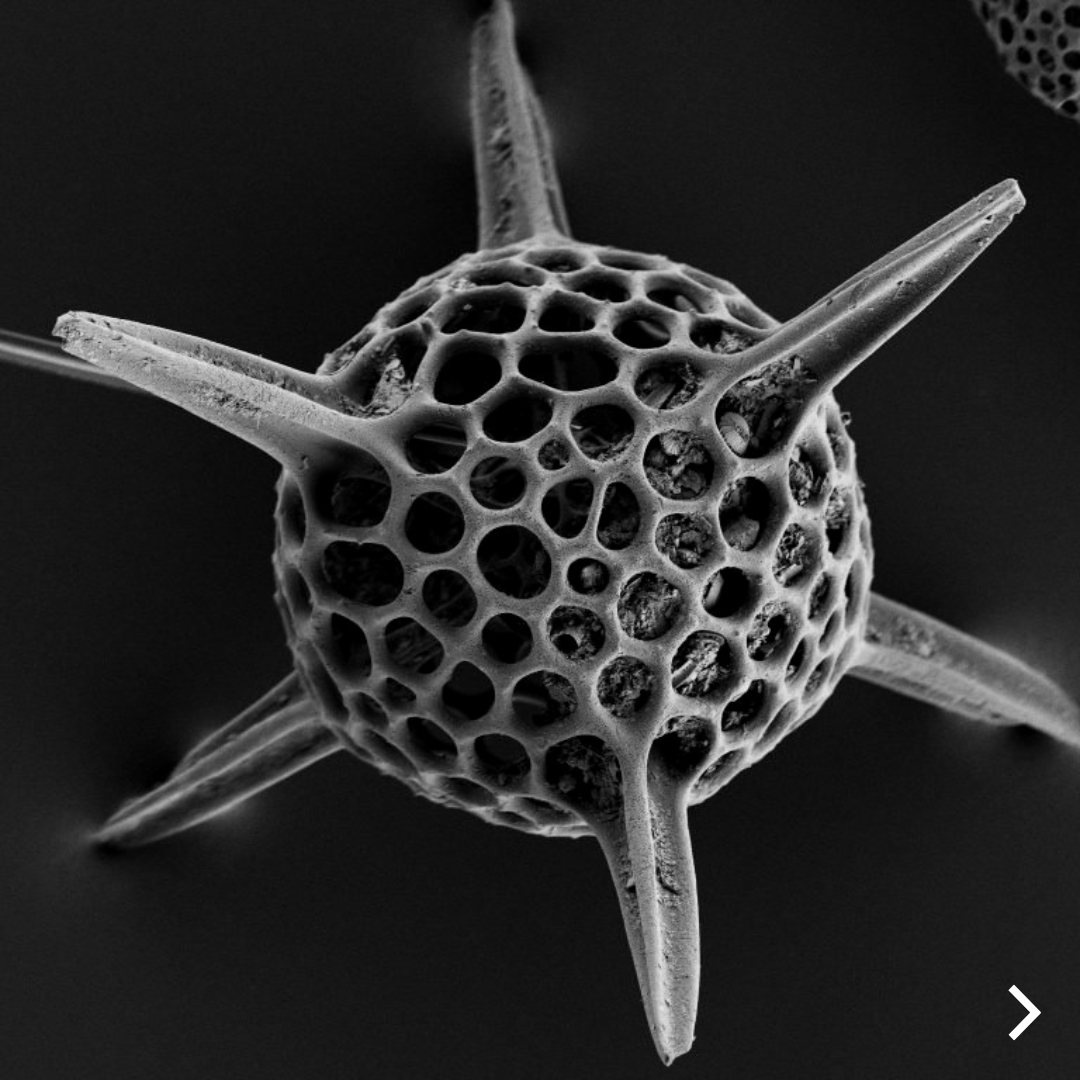
Radiolaria are microscopic, single-celled marine organisms, usually measuring fractions of a millimeter. They form a skeleton made of silica—the same material as glass—with striking radial symmetry: spheres with a fine, perforated lattice, spines, and triangular and cross-shaped structures.<br/>
Long before Meteora, during the Mesozoic Era, an ocean stretched out where the Pindus Mountains rise today. When the radiolarians died, their skeletons fell like an invisible rain to the ocean floor. Over millions of years, they accumulated in layers that turned into hard siliceous rocks: chert and radiolarite.
These rocks, often in vivid red, green, or brown layers, are found today in the mountain ranges of the Pindus and Koziakas regions. Geologists study them under an electron microscope, because each type of radiolarian is characteristic of a specific time period and helps us date the rocks.
Enter the “EGN Fossil of the Year 2027” contest
The Meteora–Pylos Geopark is participating in the European Geoparks Network (EGN) “Fossil of the Year 2027” contest and invites you to join in.<br/><br/>
Choose the fossil you like best, observe its shapes and details, and let your imagination run wild. Painting, drawing, collage, or digital art: you choose how to bring it to life.
- Submitting Projects: στο info@meteorapyligeopark.gr
- Deadline:December 31, 2026
- Prize: a beautiful geological collection
Remember: fossils are part of our shared geological heritage. If you find one in nature, take a picture of it, leave it where it is, and notify the Geopark.
Choose one. Get inspired. Create!<br/>