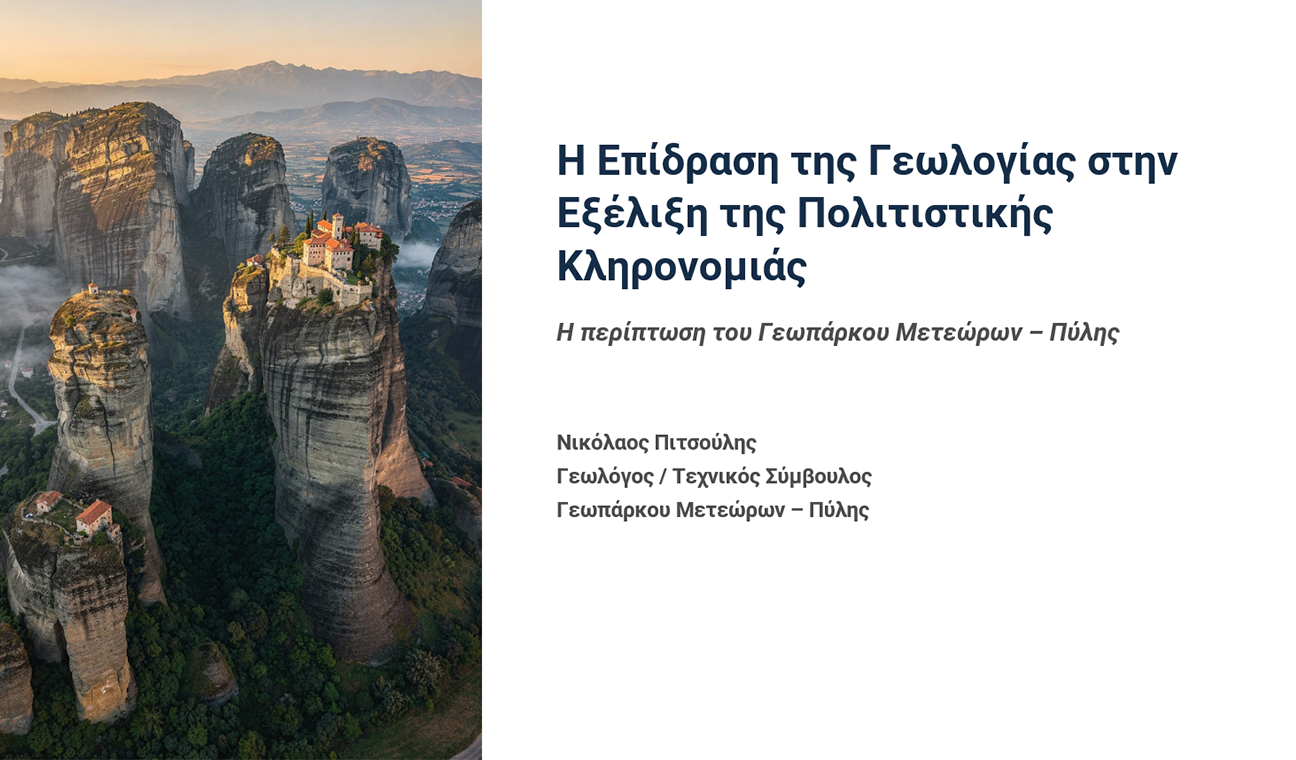
The relationship between geological context and cultural development is a critical area of study for understanding cultural landscapes. This paper examines the influence of geology on the formation of cultural heritage through a case study of the Meteora–Pili Geopark. The region combines unique geological features with deeply rooted cultural and spiritual practices, serving as a prime example of the interaction between nature and humanity.
Translated with DeepL.com (free version)
Through a literature review and interpretive analysis, the study explores how geological processes shaped the landscape and decisively influenced the development of monastic life, settlement patterns, and cultural expressions. The results highlight that geology is not merely a natural backdrop, but an active agent of cultural formation. The study underscores the need for integrated management strategies that combine geohistory and cultural heritage, thereby promoting sustainable development.
Translated with DeepL.com (free version)
Read the full study HERE

